
Overview
A Leakage Detection System is an essential safety solution designed to monitor liquid leakage, identify precise leakage locations, and provide instant alarm signals for rapid response. These systems are critical for areas where water, chemical liquids, fuel, or cooling fluids pose a risk to equipment integrity, production continuity, and operational safety.
-
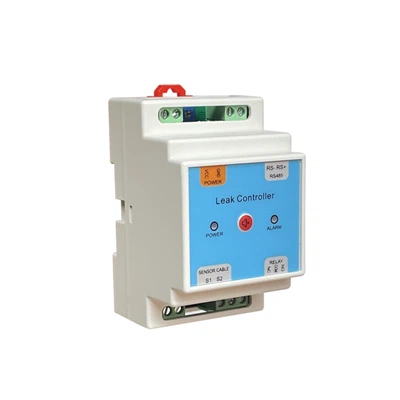
![GDRX-1BMS Leakage Collection Host]() GDRX-1BMS Leakage Collection HostThe GDRX series leakage monitoring system is mainly used for detecting areas prone to liquid leakage, such as server rooms, base stations, power distribution rooms, equipment areas, public tunnels,
GDRX-1BMS Leakage Collection HostThe GDRX series leakage monitoring system is mainly used for detecting areas prone to liquid leakage, such as server rooms, base stations, power distribution rooms, equipment areas, public tunnels,


The system operates through continuous, real-time monitoring between the sensing components and the central control unit. The operation flow is as follows:
The sensor detects a leakage condition upon liquid contact.
The controller analyzes the signal to determine the severity.
The system identifies the specific leakage zone or location.
An alarm output is triggered automatically.
Data is transmitted to external monitoring systems for centralized control.
Key Components
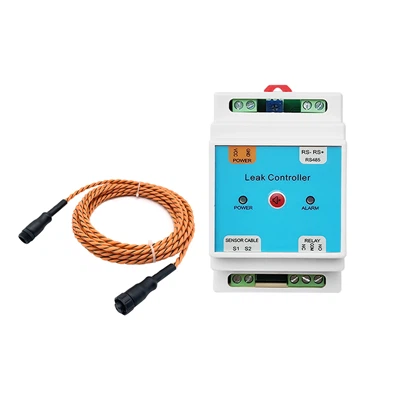
Leakage Detection Controller
The controller serves as the system's processing core.
Core Functions: Sensor signal processing, leakage alarm management, real-time fault monitoring, alarm output control, and communication with external systems.
Integration Options: Relay output, RS485 communication, Modbus protocol, and building management system (BMS) integration.
Leakage Detection Cable
This provides distributed, wide-area detection coverage.
Typical Installation Locations: Under raised floors, around cooling equipment, along pipelines, near tanks/pumps, and inside mechanical rooms.
Selection Factors: Cable length requirements, compatibility with the target liquid (e.g., water, oil, chemicals), installation environment, and ease of maintenance.
Alarm and Communication Interface
Provides connectivity to Building Management Systems (BMS), industrial control platforms, remote monitoring centers, and security management systems to ensure centralized oversight.
Primary Applications
Data Centers
Monitors cooling pipes, air conditioning units, and chilled water equipment to protect servers and power infrastructure.
Industrial Manufacturing
Protects hydraulic systems, chemical processing lines, and storage areas.
Battery Energy Storage
Monitors liquid cooling systems and battery containers to enhance facility safety.
Mechanical & HVAC Rooms
Provides continuous protection for pump rooms, water supply areas, and critical equipment zones.
System Selection Guide
By Leakage Type
Choose sensors based on fluid characteristics, such as water, oil, cooling liquids, or specialized chemicals.
By Detection Area
Evaluate total monitoring distance, layout complexity, cable routing requirements, and the number of zones.
By Integration Needs
Confirm the required communication protocols and compatibility with existing plant-wide monitoring systems.
Technical & Quality Standards
When evaluating a system, procurement teams should prioritize the following:
Detection Accuracy: High-precision location reduces inspection time and enhances maintenance efficiency.
Response Time: Rapid signal processing ensures operators can intervene before minor leaks become major hazards.
Environmental Compatibility: The system must be rated for specific temperature, humidity, and exposure conditions of the installation site.
Production Quality: Suppliers should demonstrate rigorous electronic assembly, standardized cable production, and thorough functional testing (electrical performance, communication, and alarm verification).
Customization & Project Support
We provide flexible configurations tailored to specific project requirements:
Customized sensing cable lengths.
Multi-zone monitoring capability.
Adaptation of controller functions and communication interfaces.
Support for system integration and industrial equipment OEM projects.
Frequently Asked Questions
As one of the most professional leakage detection system manufacturers and suppliers in China, we also support customized service. Please feel free to wholesale advanced leakage detection system made in China here from our factory. Contact us for more details.
commercial water leak, Leakage collection system, commercial water leak detection